Storm Wind Damage Emergency Roof Tarping and Temporary Protection
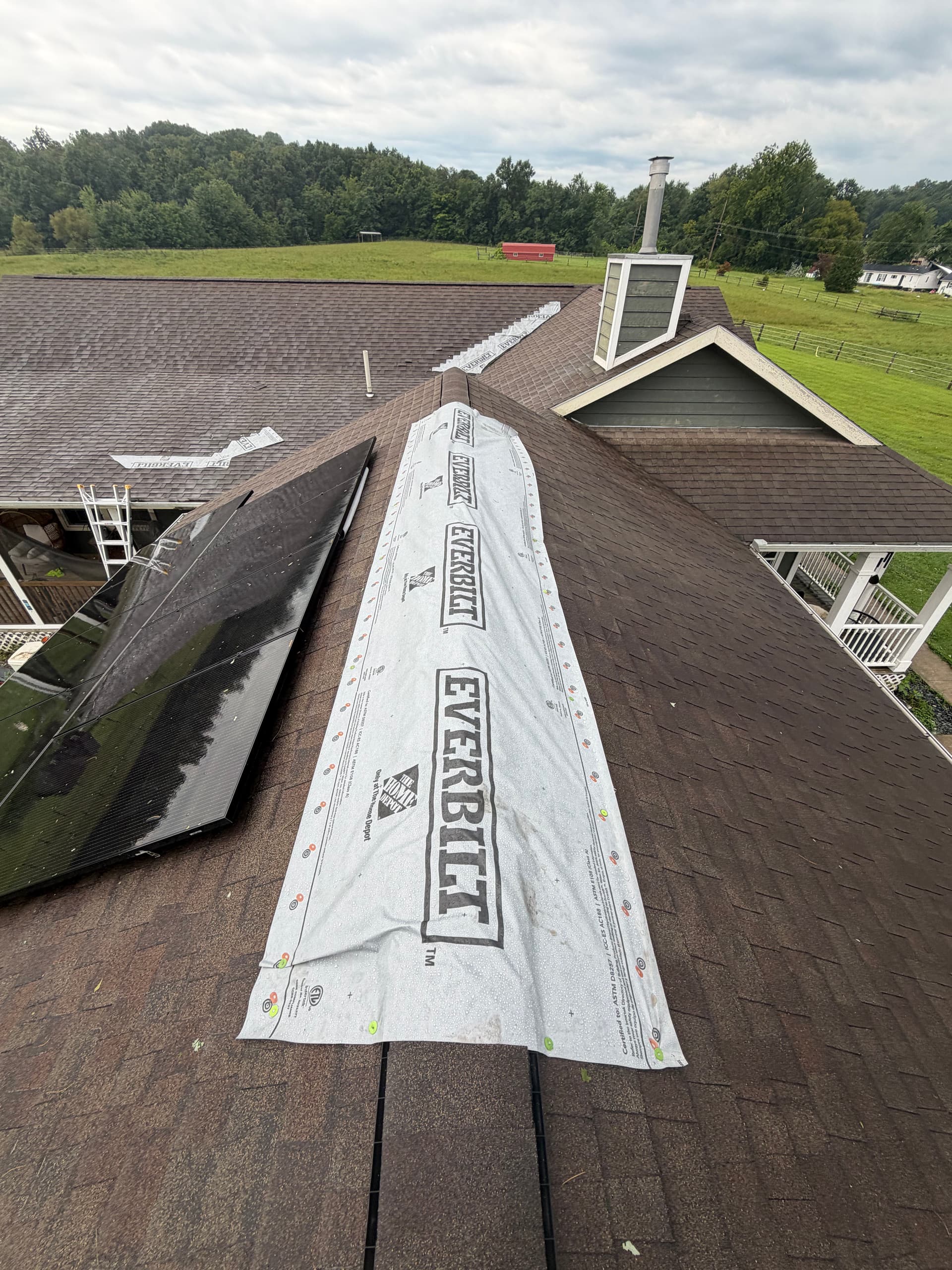
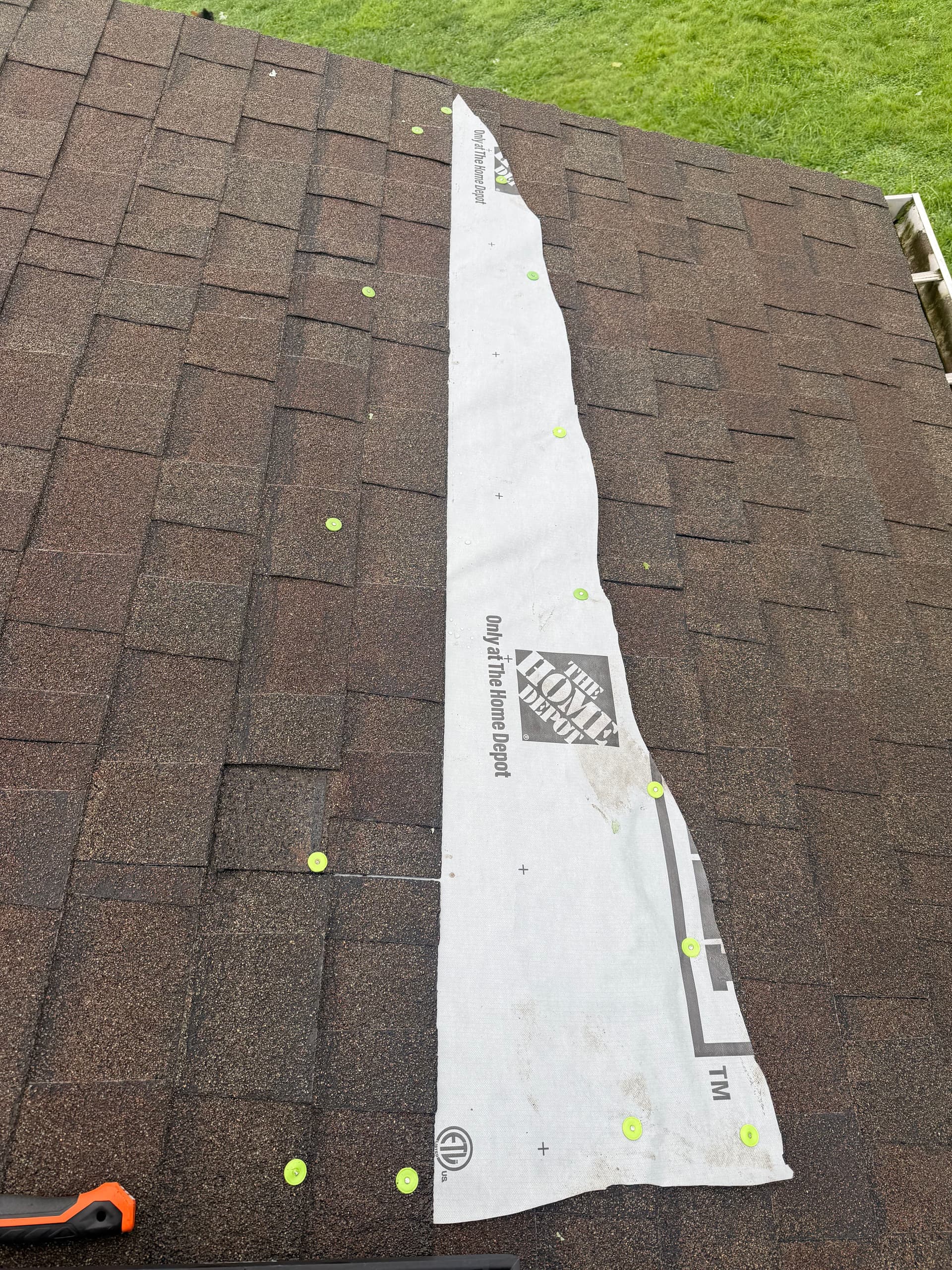
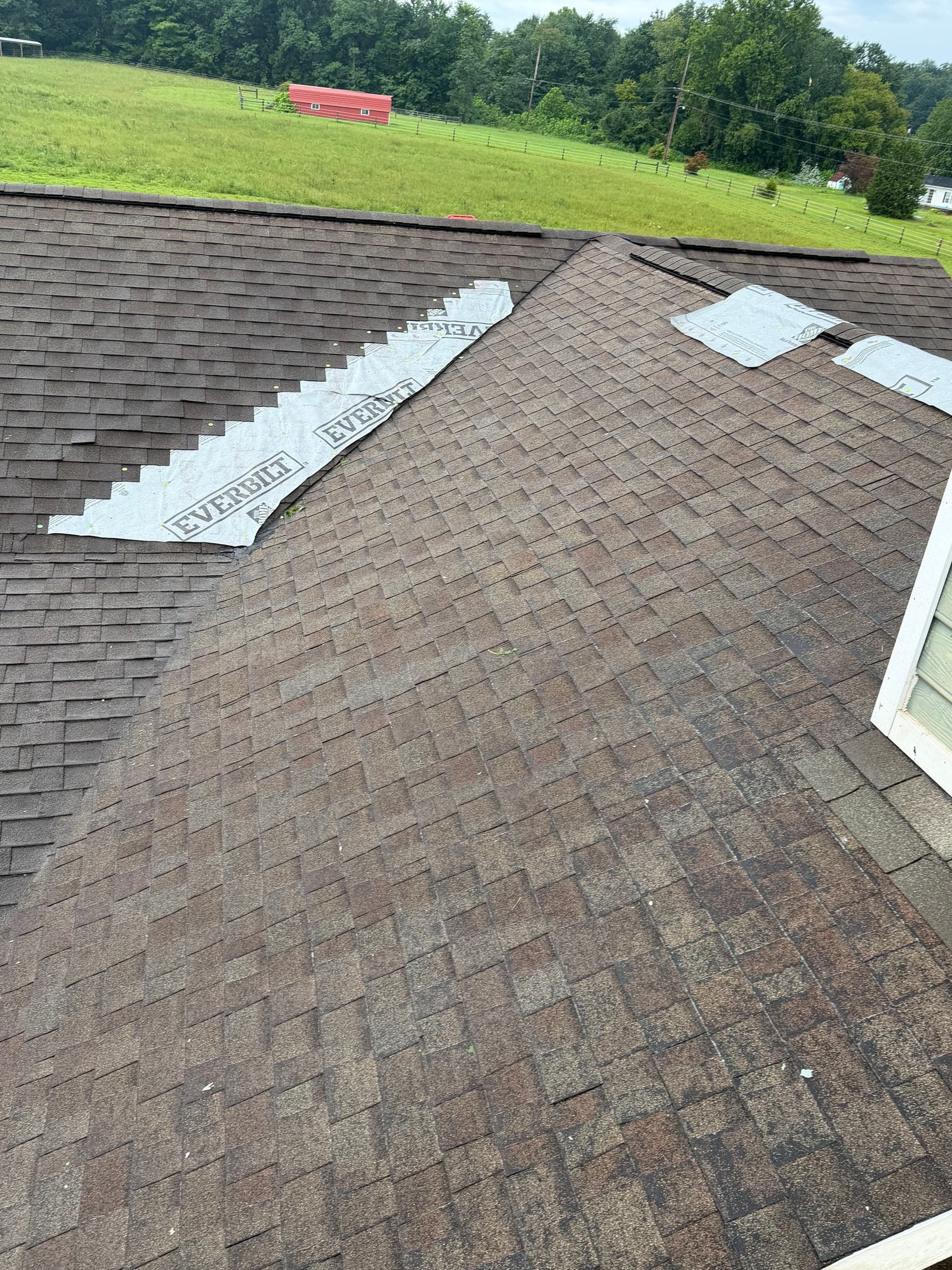
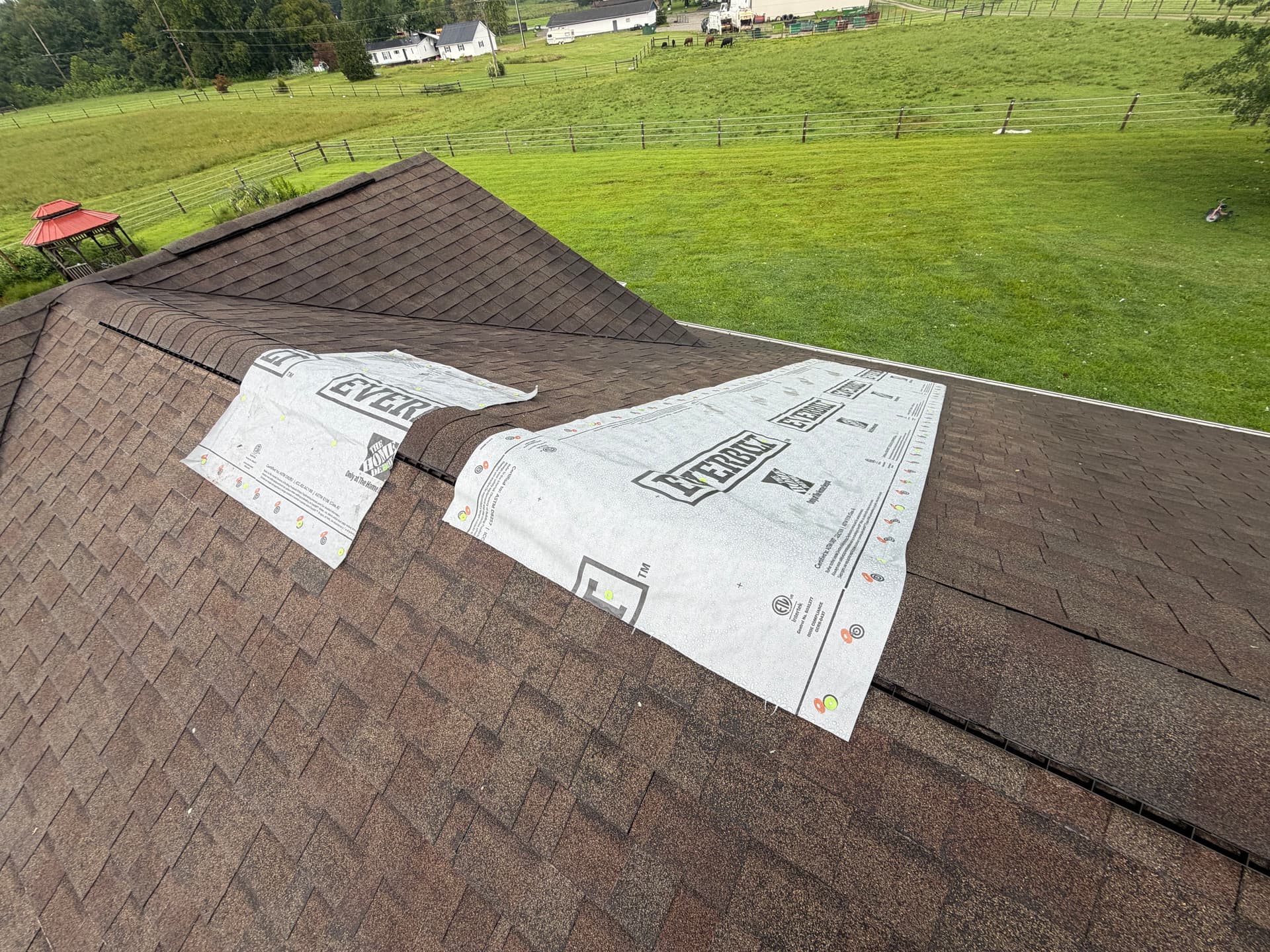
High winds don't give much warning. One bad storm can rip shingles clean off a roof and leave the decking underneath completely exposed. Once that happens, every hour without protection is another hour water has a direct path into your home - soaking insulation, damaging ceilings, and quietly making the repair bill bigger.
Here's what we were working with on this one. A large section of shingles got peeled back by high winds, exposing the underlayment and deck along the ridge line and upper slopes. The damage stretched across multiple roof planes, which is pretty common with strong gusts - they hit from an angle and catch the edges of shingles like a sail.
Our first priority with any storm call like this is stopping the water intrusion. Before full roof repair services can happen - whether that's a partial re-roof or a full replacement - the home needs to be sealed up. We get protective underlayment and tarping material fastened down tight over the damaged sections, secured with fasteners so it doesn't just blow right back off in the next storm.
This kind of emergency response matters a lot more than most people realize. Water damage that starts at the roof level doesn't stay there. It moves into the attic, the framing, the drywall. Stopping it fast keeps a manageable roofing repair from turning into a much bigger structural problem down the road.
If your home took wind or storm damage and you're not sure what's going on up there, don't wait on it. Getting eyes on the roof quickly - and getting it secured if needed - is always the right first move.